This niche holds two customers who think in opposite ways. A car owner wants one perfect part for one vehicle and rarely asks about the price of plastic. A small business wants a dozen identical pieces, cares about how they look on a counter and may come back next quarter. Trying to serve both with one shop usually serves neither, so choose a side first.
Buyer one: the car owner
Enthusiasts search by make, model and year. Etsy has dedicated market pages for printed car phone holders, and one shop is built almost entirely around Subaru and Toyota parts. Each model is a tiny market with few rivals, which suits a small seller who owns or can measure the car.
Best bets for car owners
- Vehicle-specific dash mounts and gauge pods sell on fit, not plastic. Start with a car you can measure, because guessing at a curved dash means returns.
- Cup holder inserts and console trays show what a single owner community will pay. Wrangler owners spend $25 to $60 on small interior parts from Sheltech 3D, though those pages do not confirm the parts are printed. Pick one or two popular vehicles and get the fit right.
- Classic car obsolete parts have thin competition because buyers compare against scarce originals. A print service reports four Camaro bezels at $120 versus $400 or more at swap meets. That is a vendor anecdote. Small, non-safety clips sold in sets through owner forums, such as this Mopar thread, look like the realistic version.
- Sim racing mounts are not for real cars, but the buyer is similar. One shop sells a printed Stream Deck mount at $63.75 to $75. Stay with plastic mounts for popular wheelbases, since adding electronics brings support and warranty work.
Buyer two: the small business
Business buyers care about consistency and reordering. The order size is what makes it work, because one customer may take ten or thirty units. Direct contact usually matters more than a marketplace listing here.
Best bet for businesses
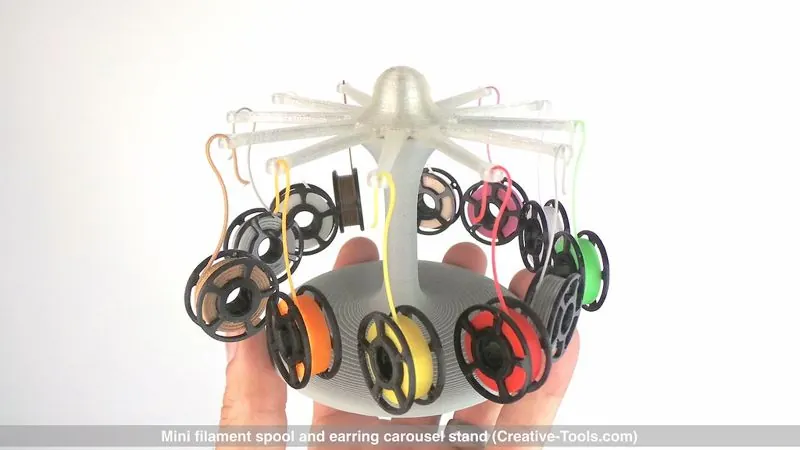
Jewelry and earring display stands go to other sellers, who often want many units in one colour. A Faire wholesale listing shows a printed stand at $19.80 MSRP. Matte finishes matter, because $12 acrylic stands win if yours looks like raw plastic.
Two others are worth a small test. QR table numbers can work as a set for one restaurant, provided every code scans, though the Etsy price comes from a tool vendor's claim and laser-engraved rivals are cheap. Custom logo signs have the highest tickets here, but those comparisons are wood, metal and acrylic signs, so printed prices remain unconfirmed.
Bigger opportunities come with more sales work. Machined fixtures can cost thousands, and Stratasys uses a $12,000 baseline for six fixtures in its own whitepaper, so treat it as a vendor figure. Factory jigs need CAD skill, direct selling and tolerances you can hold.
What the numbers say






Read this table with care, because the evidence behind it varies widely. Estimates are for a typical specific product in each niche, at its midpoint price and print time, with model costs, fees, packaging and $15 an hour of labour, and no shipping. The sim racing figure is for a handbrake bracket at $30 to $70, and the classic car figure for a vent bezel at $25 to $55. Both are ideas to test, not listings seen. The factory jig price is an assumed $15 to $40 rather than a fixture quote, so its $0.99 says little about real jobs. Use the calculator with a quote you would actually give.
Three to avoid
- Car-brand emblems and badges are the trademark itself. No file licence can give you a car maker's logo.
- Promo logo keychains lose to moulding on any real volume, with moulded suppliers reaching from $0.65 at volume. Printing only has a chance on runs under about 100 units.
- Consumer drone accessories face DJI's own parts, and no printed listing turned up. Weight limits and firmware rules make anything flying risky.
Be careful with themed trailer hitch covers too. The best-known designs use other people's brands, so only original hunting, fishing or trade themes make sense.
Designing your own
Almost everything here starts from measuring a real object, which makes it a natural fit for original design. For car parts, buy or borrow access to the vehicle, then build fit test pieces before the final shape. Most free car mount files restrict selling prints anyway, so your own model is usually the shorter path.
For a classic part, scan or model the original yourself. Do not reuse OEM drawings. For business orders, build one template you can adapt in minutes, because labour follows how fiddly a part is and not how many ship. A template with your own font rights also spares you from relying on customiser files, which are often personal-use only.
Legal and safety limits
- Say "fits", and know that even that has limits. In 2022, Printables removed Honda-related models after a takedown notice, including unbranded parts that were only compatible with Honda vehicles. Avoid logos, grilles and badge shapes, and keep a backup sales channel.
- Check EU design rights. A law firm note describes a repair exception for parts restoring original appearance, if their origin is clear. Read it before selling replica trim there.
- Stay out of safety parts. Do not print anything structural or anything a driver depends on. Motorcycle plate brackets add vibration, heat and plate rules, so non-load-bearing adapters are the limit.
- Design for heat. PLA sags in a hot cabin, so print interior parts in ASA or ABS. A reviewer of one mount also reported heat warping and adhesive lift, so test the fixing as well as the print.
- Get logo permission in writing. Ask every client to confirm they own the logo they send. On factory work, agree an NDA and who owns the fixture files before you start.
Pick one vehicle or one type of business, then talk to those people where they already gather. In this niche, a forum thread or a local visit can tell you more than a listing.
Estimates are ours unless a source is linked. This guide was drafted with AI and reviewed before publishing.
Compare prices, profit and competition across every product we score.
See product scores