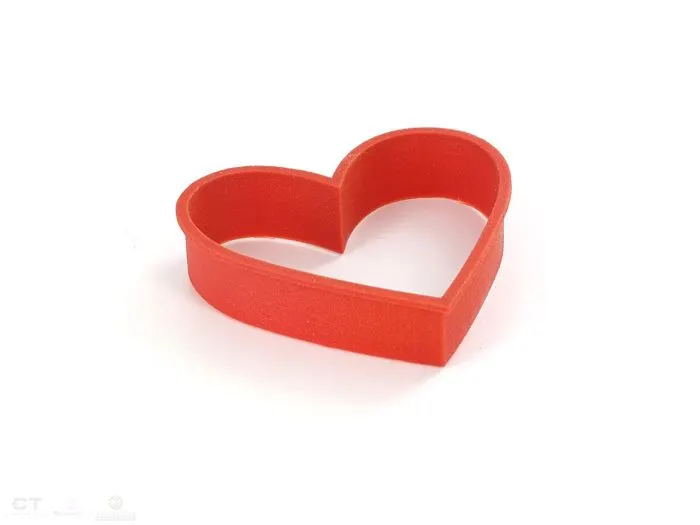
The kitchen is one of the thinnest categories for printed products, and the reason is food. Anything that touches what people eat brings questions a small seller struggles to answer, so the workable products in this niche keep their distance from the food itself. It helps to sort every idea by that distance before looking at price or demand.
Sort every idea by contact
- Touches food directly: spatulas, scoops, funnels, cookie cutters, unlined bowls. Treat these as the danger zone.
- Sits near food: cake pop stands, cake toppers, anything an unwrapped treat might brush against. These raise hygiene questions and need careful wording.
- Never touches food: holders for sealed capsules or corked bottles. This is where the realistic products sit.
What "food safe" really involves
The problem has three layers. First, guides warn that layer lines and pores can hold contamination even after washing. That source is a print vendor's guide, but All3DP's coverage of PLA shows how unsettled the question is for sellers. The product notes on cookie cutters add that PLA softens in hot water and that standard brass nozzles are not food safe.
Second, a safe raw material does not make a safe finished print. Approval generally attaches to the material, and documentation for the finished item is rarely available.
Third, the rules are written for the article and its supply chain. In the EU, Regulation 1935/2004 applies when food contact materials are placed on the market, and manufacture must follow good manufacturing practice. In the US, an FDA food contact notification is effective only for the manufacturer or supplier it names, under the stated conditions of use. A filament spool bought online does not hand you that paperwork.
The practical rule: never write "food safe" on a listing unless you can document it, and treat this section as a starting point rather than legal advice.
Who buys
- Coffee capsule owners who want tidy storage for a specific capsule format.
- Gift buyers looking for a housewarming, Father's Day or Christmas present that photographs well.
- Occupational therapists and people with weak grip, for whom a custom size can matter more than price.
- Home bakers and small bakeries, though they are hard to serve profitably, as the table shows.
The three that can work
None of these is a clean win, and a small shortlist is the honest result for this category.
Coffee pod holders
Coffee pod holders have the strongest retail signal. Bunnings lists a 24-pod Vertuo holder at A$69.95, and Woolworths describes the same type as 3D printed. Vertuo pods are poorly served by generic racks, which is the opening. They also hold sealed capsules, so there is no food contact to worry about. The weakness is time: parts are large and print for 4 to 14 hours.
Balancing wine holders
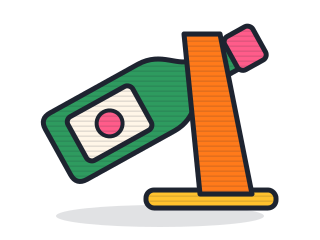
Balancing wine bottle holders sell a trick, and tricks photograph well. Prices are thinly confirmed, with Sostter seen at GBP 24.99 in search results only. The commercial risk is stability, because a tipped bottle becomes a damaged-goods complaint, so test with real bottle weights rather than one sample.
Custom-fit grip aids
Grip and dexterity aids work only as a fitted service, for example alongside occupational therapists. As a generic listing they are a poor bet, for reasons covered below. Custom sizing is what moulded aids cannot offer, and it is the only thing that justifies a price here.
The numbers
Profit per print hour is estimated for a typical specific product in each niche, at its midpoint price and print time, after estimated costs and selling fees. It compares products and does not predict earnings.
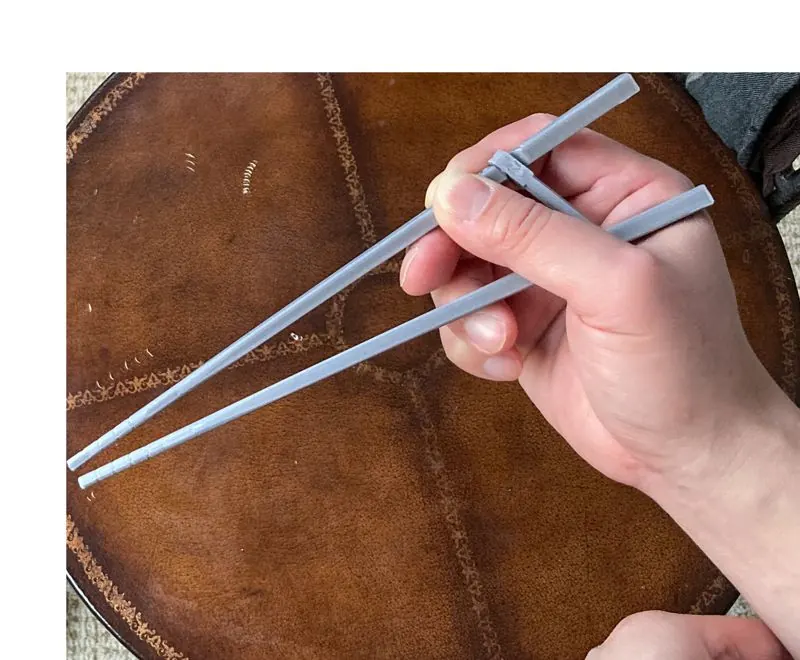



The grip aid figure looks best and means the least. It assumes a tap turner at $8 to $14, and real buyers often pay nothing, as the next section shows. Coffee pods and wine holders show the opposite pattern: lower figures, but on products a stranger might actually pay for.
What to avoid
- Food-contact utensils: liability with no upside. Commodity metal and silicone tools are cheap, and printing offers no clear advantage.
- Cake pop and dessert stands: Nordic Ware and similar mass-market stands cost about what a large print costs to make, which leaves an estimate of only $0.22 per print hour. Only a custom themed stand for a baker could make sense.
- Generic grip aids: Neil Squire reports more than 27,000 assistive devices delivered through Makers Making Change, and Northbrook's library prints a key turner at $0.78. A paid generic version has little room against that.
Making your own
- Pod holders: commit to one capsule system and design around its exact dimensions. Fit is the product, and a resold free file is the failure case. Some files are also explicitly non-commercial, such as a CC BY-NC-ND model noted on the product page.
- Wine holders: work out your own balance geometry, then personalise it. Popular files often sit behind paid memberships, so check whether a tier allows selling prints at all.
- Grip aids: take a customer's measurements and build a handle or turner for that hand. Makers Making Change designs are open source, often CC BY-SA, so check attribution terms if you start from one.
Etsy adds a further reason to draw your own: its rules require printed items to be based on a seller's original design.
Rules and risks
- Wording: describe what the item holds, such as "for sealed capsules", and say plainly when something is not intended for direct food contact.
- Medical claims: the FDA looks at intended use when deciding whether something is a device. Sell grip aids as everyday tools and avoid claims about treating a condition. Check before making any.
- Handles on utensils: a built-up handle sits close to food, so it needs the same care as a utensil.
- Brands: Nespresso and Vertuo are trademarks, so describe fit and leave logos off.
- Heavy loads on a table: a wine holder carries glass and liquid above a surface. Tell buyers which bottle sizes it was designed for.
Estimates are ours unless a source is linked. This guide was drafted with AI and reviewed before publishing.
Compare prices, profit and competition across every product we score.
See product scores