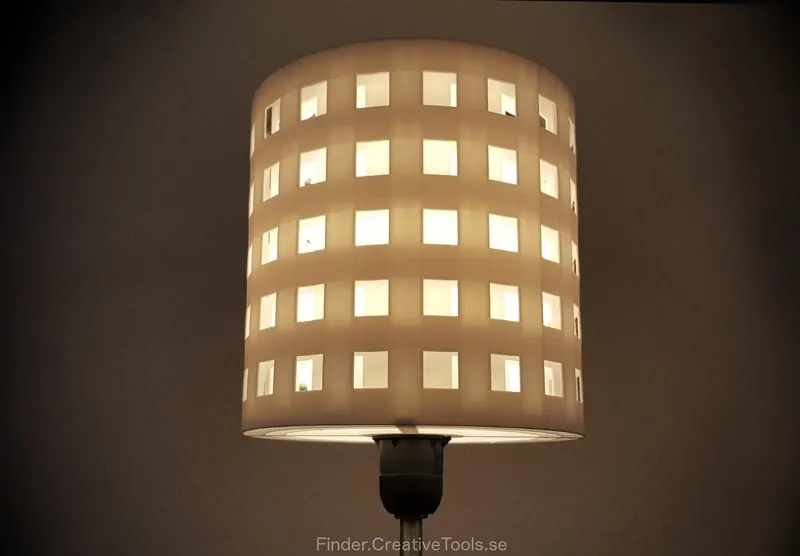
During the pandemic, Sean Kim ordered a Noguchi paper lamp and the shade arrived torn. The retailer sent a replacement. Kim, then studying industrial design at Pratt, kept the damaged lamp and printed a new shade for its base.
By late 2025, the company that grew from that repair said it was selling 15,000 lamps a year. That number is Wooj's own and has not been independently checked. Even so, the parts that can be checked make this one of the clearest cases of a printed product sold as a design object, not as a print.
From programmer to closet factory
Kim did not come from a design background. He studied psychology and worked as a programmer for four years before Pratt. The name Wooj comes from his Korean name, Woojin.
After the repair, he designed a new base, sourced the parts and posted the lamp on Instagram. Five people bought one. He then tried Instagram ads, then influencers picked it up, and demand took off.
Production stayed almost comically small. Kim ran six printers around the clock in a closet, and a neighbour across the hall helped wire the bases. Core77 says about 2,000 lamps came out of that closet before he moved to a proper space. By March 2022 he had sold roughly 5,000 units and hired four employees. By August that year, Hunker counted six printers and seven staff in a Brooklyn studio.
That is worth pausing on. Thousands of lamps left a closet with six ordinary machines. This business grew on one product and its story, with no large print farm behind it.
What they sell
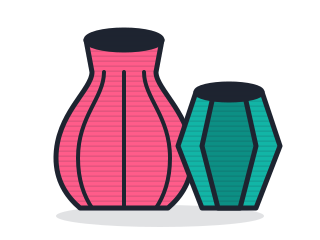
The Wavy Lamp, with its rippling shade, remained the top seller, starting at $130 in 2022. It also won a Core77 Design Award. The range later spread to vessels, a clock and new shades such as the Pleat Lamp, priced at $180 at launch.
By October 2025, lamps sold for about $100 to $265, with five models under $100. MoMA's design store lists Wooj lamps too, which says more about the brand's standing than any spec sheet.
Compare that with the plain market. Ribbed table lamps sell at $30 to $79 and pendant lampshades at $20 to $70. Wooj uses similar plastic and simple machines but charges more, because the buyer is paying for a design and a name.
The equipment is modest. Joris Peels of 3DPrint.com reports mainly Artillery Sidewinder printers plus some Bambu Lab and other machines, running mostly PLA and PETG. He argues that this is the point: the value sits in the design and brand, not in the printer.
The turning points
There were three, and none was a new machine.
The first was the move to paid ads and influencers, early on. Five sales to friends told Kim the product worked. The ads told him strangers would pay.
The second was space. In April 2024, Wooj moved from Bushwick to the Greenpoint Manufacturing and Design Center, a nonprofit offering subsidised space to makers. The studio became four times larger for only slightly more rent, after a tip from another design company. Kim described space as the hardest thing to find in New York.
The third was widening the range by working with others. In 2025, Wooj planned new releases every month and said it would more than double its products, with several lamps made alongside outside designers. Monthly drops give an audience something new to talk about, and shared designs mean Kim does not have to draw everything himself.
What went wrong
No public account describes a major crisis, and no revenue or profit figures have been published. So treat this as a partial picture. If 15,000 lamps a year is right, even at $100 each that would be $1.5 million, but this is rough arithmetic and not a reported result. Peels reads the volume as a sign of profit, and that is his inference.
The problems that are on record are practical ones. Kim's first factory was a closet, and capacity set the limit early. Space stayed a problem in New York, and the holiday rush forces the team to tune its process each year.
The clearest sign of how Wooj handles trouble is a product. Its Distorted lamps are the results of failed experiments, reheated and reshaped by hand so that each is unique. Waste became stock.
Wooj has also stopped trying to make everything itself. It now uses premade lighting units across more lamp models. That is a small line in one article, but it is a sensible decision, since nobody buys a lamp for its wiring.
How the brand speaks
Its marketing is calm. Wooj had about 151,000 Instagram followers when Peels wrote about it, and it publishes short videos on production and design decisions rather than hard selling. Peels contrasts this relaxed tone with the usual Instagram style.
The company's stated aim is modest too. Kim told Hunker the goal is to grow within limits that suit a small studio and to keep prices reasonable, and he has been developing lower-cost lamps. In a market full of print farm growth stories, deciding what size you want to be is a real strategy.
Three lessons to copy
Before you start, note two risks. Well-known lamp shapes can bring takedowns, so make your own form rather than copying a designer classic. Wired products also carry electrical safety rules, so check those for your country first. Our home decor guide has more.
- Sell a finished object with a story. Kim's torn shade gave every buyer something to retell. Write down why your product exists in two sentences, and put that on the listing above the specifications.
- Buy in what does not make you different. Wooj prints the shade and uses premade lighting units. List your parts and printing steps, then buy in anything customers would never notice.
- Prove it with five buyers, then ads. Five sales led to ads, and ads led to influencers. Sell five at full price to people outside your family before you buy a second printer, and spend a small ad budget only after that.
Estimates are ours unless a source is linked. This guide was drafted with AI and reviewed before publishing.
Compare prices, profit and competition across every product we score.
See product scores