Slant 3D did not begin as a plan to print things for other people. It began with a small robot arm kit that its makers did not expect to sell. Gabe Bentz later told Plastics Machinery & Manufacturing the kit was printed because "we were lazy and didn't want to design it for molds." The kit sold better than expected, and retail stores needed more units than a few desktop machines could make.
That accident shaped everything after it. The company's own printing capacity turned out to be worth more than the product it was built for. Slant 3D is a useful story for small sellers for a second reason too: today you can rent the farm it built.
From a design studio to a farm
Bentz trained as a mechanical engineer in robotics. In 2017 his design firm, Slant Concepts, found that printing was economical at volume while building capacity for its own products. That work became Slant 3D. The dates vary a little: a 2017 report already calls it a spin-off, while a 2025 profile says it was spun out in 2019.
The start was humble. Bentz found the Idaho Small Business Development Center through a Craigslist ad and took space at its Nampa business accelerator. In 2017 the company was already claiming the largest printer farm in the Northwest US, an unverified claim, and building its own printers rather than buying them.
By 2020 Slant 3D had hundreds of in-house machines and customers including Amazon and Nickelodeon, according to TCT Magazine. Typical runs were 1,000 to 10,000 parts, and it did not focus on one-off prototypes. The same interview gave a company example of medical equipment vents made in about two weeks, against an estimated 12 weeks for injection moulding. The Idaho SBDC reported growth of 50 to 80% a year, which also traces back to the company.
The turning point: renting out the factory
For years the customers were companies. The bigger change came when Slant 3D started plugging its farm into ordinary online shops.
An Etsy plug-in came first, then a beta API in 2024 that automates slicing, pricing and printing. In August 2024 came a Shopify plug-in: a merchant uploads a model, an order arrives, and Slant 3D prints and ships it. Customers pay only after a product is made, so there is no stock to fund.
Bentz's own example from 2025 shows the appeal. A part that costs $3 to make could sell for $10, and the creator pays nothing up front. That leaves a gross gap of $7 on his illustration, before shipping, platform fees and advertising. It is an example, not a price quote.
One real product shows how this works. The Jointlocker, a lighter case, was designed by one person, commercialised by another company, redesigned for printing and sold at Urban Outfitters for $24.
The size of it
Much of what is public comes from the company, and capacity is often quoted instead of machines running. Keep that difference in mind.
| Measure | Figure | Status |
|---|---|---|
| Largest farm | Specified for 3,000 machines | Company figure for capacity. The profile does not say how many run today |
| Staff | Around 20 | January 2025 profile |
| Part size limit | An 8 inch cube | Company stated |
| Turnaround | 2 to 5 days | Company stated |
| Break-even with moulding | About 100,000 units | Bentz's estimate |
| Funding | $1.5 million Series A, April 2025 | Reported by TCT, investors not named |
Bentz also says the company has always been profitable, and he expected to reach an IPO stage in about three years. Neither can be checked without published accounts, and none were found.
What went wrong
The clearest failure was selling hardware. Around 2020 the company offered Mason, a desktop printer, hoping customers would prototype on it and send in final files. Bentz now calls selling a machine a mistake outside its core skill, because customers did not use it reliably that way. He speaks of a large graveyard of cancelled projects and says failing experiments should be stopped fast.
Progress is also hard to track from outside. In 2020 TCT reported an 800-printer site in Boise due by mid-year. A 2025 profile lists plants in Boise and Austin, and TCT reported a planned factory in Louisville, Kentucky for shorter shipping times. No source found for this story confirmed how many printers Boise reached, or that Louisville has opened.
The personal cost was high too. Bentz reports weeks of 90 hours or more, and he told the Idaho SBDC that real work on a business should hurt. It is one founder's view, but do not read this as a passive income story.
There are limits for sellers as well. The Shopify plug-in, as described in 2024, offered PLA colours at 0.2 mm with 25% infill. TCT gave no per-part prices, so check current rates yourself. Any order you send to a farm also relies on its quality and shipping, while your name is on the listing.
What a small seller can use
You probably do not want to build 3,000 printers. You can use what this business built instead, or copy how it thinks.
Print on demand suits a designer who has no printer, or a seller with a spike they cannot fill. Etsy's rules also allow it: farms can fulfil orders as long as the product is the seller's own design. Read our Etsy rules guide first.
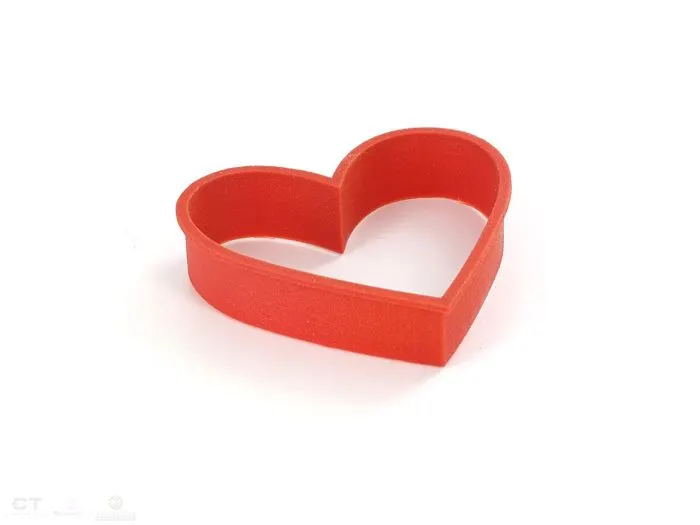
Simple small products suit this model best. Slant 3D's consumer work includes cookie cutters, lamps, tools and gadgets, and its industrial side makes wheels, brackets and gears. For a comparison, cookie cutters sell at about $3 to $14 with high competition, while factory jigs and fixtures face low competition but depend on finding business buyers.
The design lesson is the one Bentz repeats. He says that when a part is designed for printing, it can come off the machine and go straight into a box. Less finishing means less labour, and that applies even with one printer.
Three lessons to copy
- Follow the unexpected demand. The robot arm was the plan and the farm was the surprise. Check every month which products and services people actually ask for, and be ready to drop your favourite idea.
- Design out the labour first. Bentz's parts are meant to go straight from plate to box. Time your finishing on your best seller, then redesign it to cut that time before you add a printer.
- Test on someone else's capacity, and kill failures fast. Slant 3D dropped its machine sales. Use a print-on-demand service to test one design before buying hardware, set a sales target and a date, and stop if it misses.
Estimates are ours unless a source is linked. This guide was drafted with AI and reviewed before publishing.
Compare prices, profit and competition across every product we score.
See product scores